Beyond Career Day: Designing Exploration that changes trajectories
(Originally posted on the All4Ed Website.)
Walk into most districts, and you’ll find a familiar pattern: pathways beginning in high school. At this level, many teams are busy designing academies, revising schedules, forming business partnerships, and gaining access to college-in-high-school opportunities. Now, don’t misunderstand, these are all good things, but starting here means we’ve wasted an incredible opportunity. Today’s reality is that, beyond sporadic career days and a few stories that come with the reading program, very few districts are intentional about beginning pathway work in the earliest grades. When early exposure depends on the luck of a learner’s home environment, inequity grows quickly and quietly.
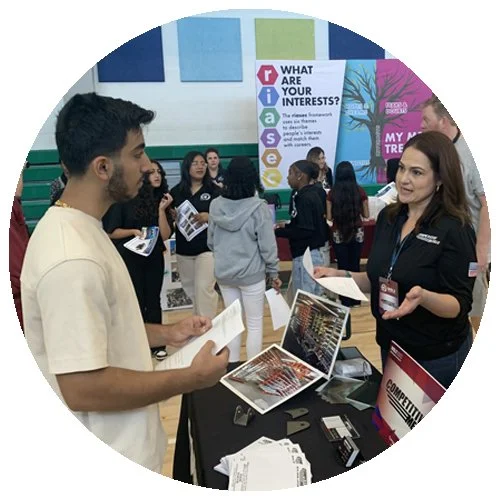
By ninth grade, learners have spent years forming beliefs about what people like them can do. For most learners, their view of the world, its possibilities, its limits, and its “lanes” to where one fits has been shaped long before they set foot in a high school hallway. And too often, that worldview is naturally limited to the careers they’ve seen and the adults they know.
This reality is exactly why Career-Connected Exploration must go beyond typical exposure. Those moments might spark curiosity, but curiosity without consistency fades. If we want exploration to truly change trajectories, it must be intentional, embedded, and designed to expand a child’s sense of what’s possible long before they’re asked to think deeply about their career interests.
Career-connected exploration isn’t about steering a six-year-old toward a specific job. It’s about giving learners the opportunity for self-discovery, where they explore their own interests and passions, and talents, and how these personal attributes intersect with the evolving world of work. It’s about cultivating agency, identity, and possibility. When pursued consistently, these opportunities empower a child to discover their strengths, notice what energizes them, and see a world far bigger than the one under their roof.
Learners Can’t Dream What They’ve Never Seen
Across the country, traditional career exposure at the elementary level looks very similar: a once-a-year career day, a few themed lessons in social studies, and maybe a guest speaker who pops in to share what they do. These moments are well-intentioned, but they aren’t an intentional system. To be clear, exposure is not the same as exploration. Exposure shows learners what’s out there; exploration helps them see themselves in it.
Exploration requires rhythm, not randomness. It gives learners the chance to try things, ask questions, reflect, and revisit what they’re noticing about themselves. It helps them connect the dots between what they enjoy and the broader world around them. Without this consistency, early curiosity fizzles, and the window for self-discovery narrows.
Districts that approach early exploration as an instructional priority, not an add-on, see entirely different outcomes. When intentional about “career language integration” in all subject areas, young learners begin to understand who they are and process who they might want to be. They begin to recognize strengths in themselves that may not show up on a traditional report card. And they start imagining futures beyond the limited sample size of careers they’ve witnessed first hand.
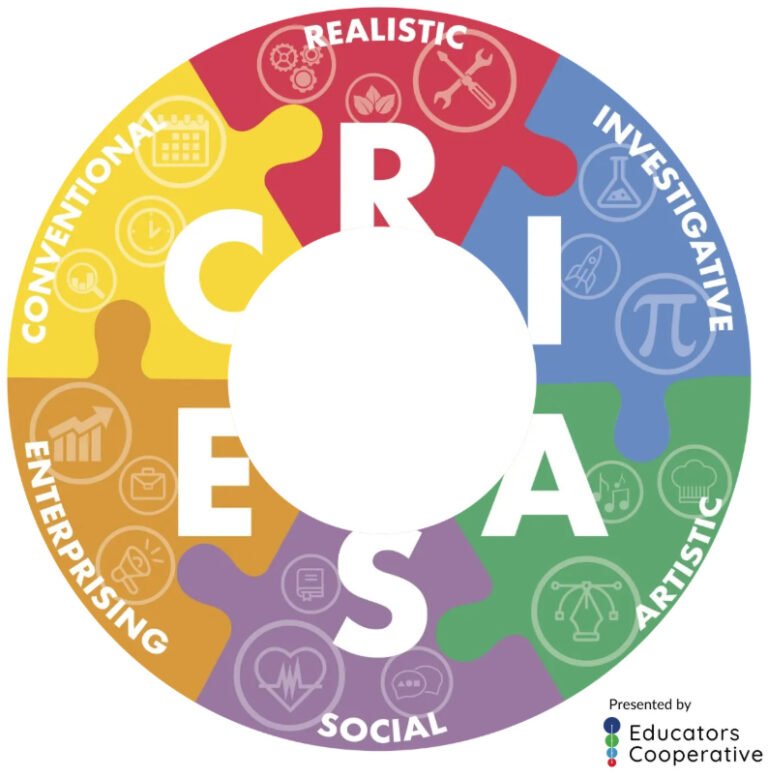
Some districts across the country are beginning to take this seriously and rebuild the early grades with purpose. Career Language Integration in the Quakertown Community School District (PA) is about connecting education to the world of work. Beginning in kindergarten, learners use the RIASEC to explore how their interests align with the world of work. As shared on the QCSD district website, “By fostering a culture of career curiosity, starting early, and encouraging open conversations, we can help our students navigate their futures with confidence. Together, we can support our children in discovering their passions and preparing for successful careers!”
Early Exploration Is an Equity Imperative
When early exploration is left to chance, opportunity is left to chance with it. This is why Career-Connected Exploration isn’t just good practice, it’s an equity imperative. Learners come to school with vastly different levels of exposure to careers, networks, and life experiences. Some grow up surrounded by engineers, entrepreneurs, teachers, healthcare workers, and tradespeople. Others have never seen an adult who loves their job. That gap, often invisible to us, can quietly shape how a learner sees their own future.
Decades of research in child development and career psychology reinforce this reality: when learners engage in regular self-reflection, explore their strengths, and connect their school experience to the world of work, they develop clearer aspirations. Studies from the OECD and others show that early, repeated exposure to career-connected learning increases agency, strengthens engagement, and improves alignment between a learner’s interests and future pathways. Linda Gottfredson’s work on career development further illustrates that children begin narrowing their perceived options often before age ten. Without intentional design, those early perceptions solidify and quietly reproduce the inequities that intentional exploration is meant to disrupt.
Districts leaning into this work understand that exploration isn’t an “extra”; it’s foundational to preparing young people to navigate their future with confidence. Cajon Valley Unified School District’s (CA) “World of Work” model creates structured experiences for learners to meet professionals, reflect on their interests, and see how their own strengths connect to real careers throughout their K-12 experience, as highlighted in one of our Profiles in Practice. Lessons are embedded across subjects, giving learners space to explore, reflect, and dream. Early Career-Connected Exploration experiences matter because they challenge the quiet narratives learners often absorb about who belongs in which careers. They broaden the sample size and shift the story. They help learners rewrite limiting beliefs before those beliefs harden into barriers. The goal isn’t to predetermine anyone’s future; it’s to give each learner the knowledge and skills to live life on their own terms.
Why Systems Matter More Than Moments
No matter how well-intentioned, isolated activities will never create the kind of transformation that intentional pathways work promises. Systems do. When schools integrate career-connected exploration into K–12 curriculum, advisory structures, family engagement, and everyday teaching and learning, exploration becomes part of the culture, not a one-off event.
In districts where this work is done well, learners aren’t waiting until high school to begin asking, “Who am I? What do I love to do? What might I want to explore?” These questions show up in kindergarten curiosity, in fourth-grade reflections, in seventh-grade advisory conversations, and in eighth-grade course planning. Teachers begin speaking a common language about interests, strengths, and purpose. Families begin hearing new stories and ideas at the dinner table.
This coherence matters. When learners repeatedly encounter career-connected learning across subjects, teachers, and years, they begin to build a clearer, more confident understanding of their strengths and possibilities. It’s not one big moment that changes a trajectory; it’s dozens of small, intentional experiences that compound over time.
Shifting the System Downstream
When exploration begins early and continues throughout K–8, the effects ripple across the entire learner experience:
Middle school advising becomes far more meaningful because learners already have a language for their interests, strengths, and emerging purpose.
Eighth-grade course selection becomes more intentional, reducing guesswork and helping learners choose high school pathways that truly reflect who they are.
High school pathways via dual enrollment, work-based learning experiences, etc., are used more effectively because learners can recognize how opportunities connect to their own interests and goals.
The system becomes more equitable, as Career-Connected Exploration no longer depends on who has how much social capital, family networks, or chance encounters with inspiring adults.
Most importantly, learners begin making decisions with intention, not by accident. Their choices reflect their strengths and aspirations, not assumptions, stereotypes, or the limits of their exposure. That’s why early Career-Connected Exploration is not “one more thing.” It’s the foundation for everything that follows, K–12 and beyond.
This post is part of a five-part series introducing Future Ready Pathways and exploring how school systems can redesign learning to better prepare today’s modern learners. In this first installment, we look at where pathway work should begin, not in high school, but in kindergarten.